

How To Dispose of Bricks, Soil, Rubble & Hardcore
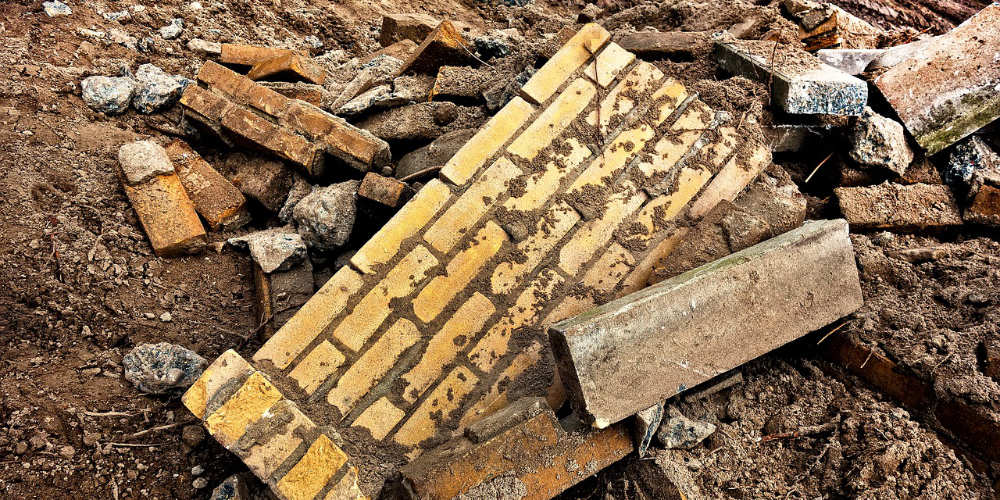
Organising a building project is stressful whether it’s in a residential or a commercial capacity. Where do you even begin with all of the waste that’s inevitably going to be created? Luckily, it’s surprisingly easy to dispose of building rubbish such as soil, bricks, rubble and hardcore – in this article, we’ll explain how you can get rid of building waste responsibly without too much stress.
What to consider before getting rid of building waste
There are several things to consider when you’ve got a big building project that’s going to create a big waste removal task for you. The last thing you want is to end up in a mess because you have mixed up different types of materials that can’t be disposed of together, or you have loaded up too much of it so it can’t be lifted and taken away.
The most important things to consider when it comes to disposing of construction waste are:
- The type of material – it’s important to know what you can and can’t dispose of when using certain waste management solutions – you can check this with your provider
- Quantity of materials – you need to make sure you are not overloading the container your waste is being placed into, in order to prevent it being too heavy to transport
- Site location – how far is your site from where your waste needs to be? Waste from big projects will probably not be able to be transported by yourself
- Budget – how affordable is your desired waste management solution?
Recycling building waste materials
In recent years, there has been an increasing global focus on sustainability. When it comes to construction, this is a particularly relevant issue – building sites produce a huge amount of waste everyday, so it’s important to think about its environmental impact when it is being disposed of.
As it happens, most building waste materials such as soil, bricks, hardcore and rubble, can usually be taken to your local recycling centre (not placed in your household recycling bin) and given a second life, which is great news for the environmentally conscious amongst us.
How to dispose of rubble?
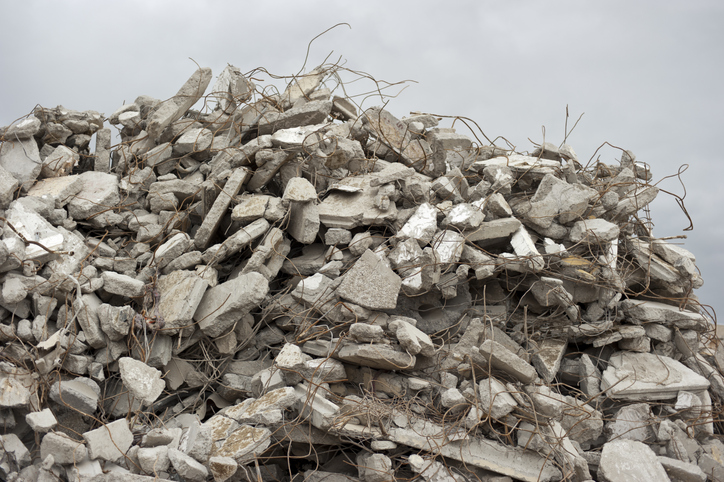
Can you take rubble to the tip?
Rubble can indeed be taken to your local recycling centre, but only in smaller amounts generated from small domestic projects. If you have larger amounts of rubble from big renovations, you probably won’t be able to take these to a recycling centre and should contact the local authority for advice on where to take it. In these cases it is usually much easier to enlist the help of a professional waste management company.
If you are a homeowner who has had building work carried out by tradespeople, legally it is their responsibility to dispose of the waste, so it is important to seek out a reputable company who will comply with all necessary regulations and dispose of waste responsibly.
How to dispose of soil

Soil is a material that often needs to be disposed of in construction and demolition, as well as for those doing some landscaping at home. But how do you dispose of soil?
Can you take soil to the tip? The answer here is yes, but with a few caveats. The first is that you might be subject to charges depending on your local council’s rules for tradespeople — something you might not want on top of fuel costs. Secondly, soil is probably one of the messiest things to deal with, so you’re likely to make a mess of your car or van if you attempt to take even one load to the tip, let alone in several journeys.
Can you put soil in a skip? Absolutely, and this is probably the best way to get rid of unwanted soil as you can load it into a skip on your site or property without having to worry about the mess. Plus, at South Coast Skips, we work hard to recycle as much of the waste received from you as possible. It’s always good to be aware of weight limits when it comes to skips, as there may be restrictions when it comes to heavy waste:
- Our 7.5-tonne skip lorry can carry a 6-yard skip with a payload of 2.5 tonnes
- Our 12-tonne skip lorry can carry a 6-yard skip with a payload of 5.5 tonnes
- Our 16-tonne skip lorry can carry a 6-yard skip with a payload of 7.5 tonnes
- Our 18-tonne skip lorry can carry a 6-yard skip with a payload of 8.0 tonnes
How to dispose of bricks
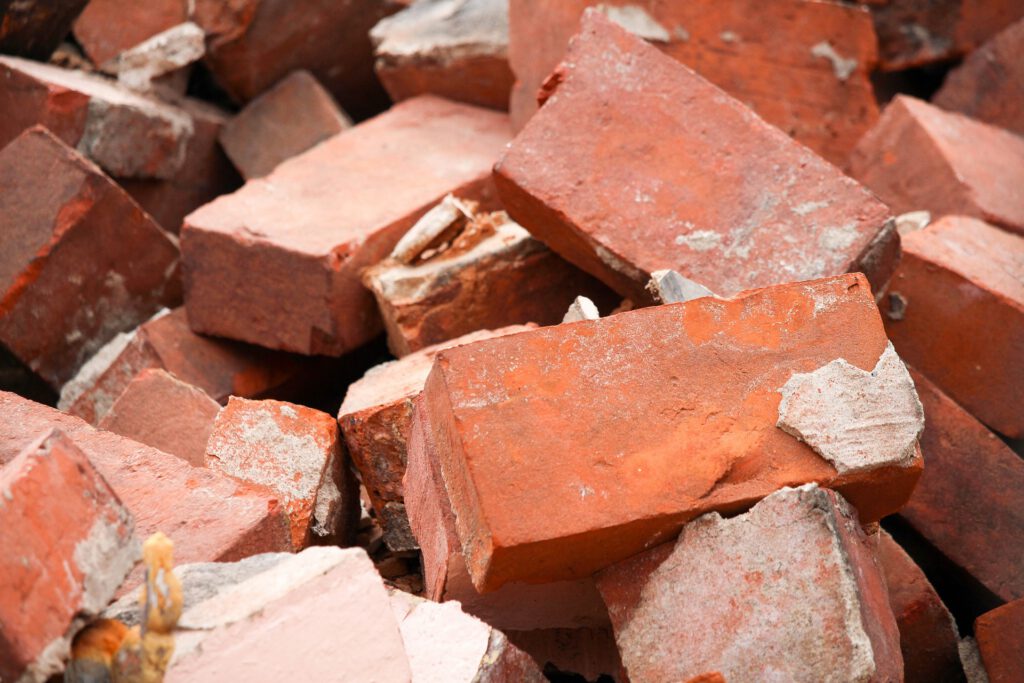
Skip hire is a great way of disposing of your old bricks, whether you have lots from demolition work or have been doing some DIY and renovation work at home. But can bricks be recycled? Yes, they can, and in several ways!
- You can collect all reusable bricks and offer them to any friends, family or neighbours who might be interested in taking them off your hands. This gives them a free resource and lowers the amount of waste that you need to dispose of.
- You can put them in a skip. With our skip hire service, we’ll take your bricks and associated hardcore with us to our facility. From here it can be separated and prepared for recycling before it’s put to use again.
- You might be able to find a specialist. Sometimes your bricks might be more valuable than you think. Certain stocks of brickwork are sought after by companies that either carry out restoration work or partner with contractors.
Skip hire for bricks, soil, rubble & hardcore
Whether it’s for domestic or commercial purposes, hiring a skip is usually the easiest and cheapest way to get rid of soil, bricks, rubble and hardcore. There are several different sizes available, everything can be piled in together, and the process is all taken care of by professionals.
Before hiring a skip, you should consider where it is going to be placed – on-site, on a driveway or on the road – and whether you or the skip company will need a permit for this. Remember that there are certain things that can’t be put in a skip, such as asbestos, plasterboard, chemically active materials, and many electricals, so check with your waste management provider if there are any materials you’re unsure about.
What size skip do I need?
If you are disposing of heavy, compacted materials such as soil, rubble, bricks and hardcore, it’s usually best to go for a smaller skip because the density of such materials can make skips too heavy for the lorry to pick up and transport. You can take a look at our guide to skip sizes too.
Choose grab hire for high-volume waste
If you’re organising an entire house clearout, a huge renovation, or a commercial construction project, you’ll likely be creating huge volumes of waste and a skip simply won’t fit the bill. In this case, you might want to consider grab hire (also known as muck away) vehicles. Able to handle tonnes of waste, these vehicles have a crane that does all the loading for you – reaching around obstacles and over fences – making grab hire a hassle-free and cost-effective way of disposing of larger loads of waste. The refuse will then be taken to a licensed recycling centre ready to be reused.
Construction waste removal
Although it seems like a huge task, disposing of construction waste such as bricks, rubble, soil and hardcore is actually easier than it seems. As long as you recruit a reputable waste management provider that disposes of waste responsibly, the process will be hassle-free and beneficial for both you and the planet.
SCS Waste is a leading waste management company serving customers throughout West Sussex. We offer first-rate solutions for both residential and commercial waste, no matter how much or little you need to get rid of. To find out more about skip hire, grab hire, or our other services, don’t hesitate to get in touch.
SCS Waste
March 13, 2020Book a skip online from anywhere in Bognor Regis.
Need mini, midi, or roll-on roll-off skips?
We also offer wait and load skips for quick waste disposal.