

What Is the Difference Between Commercial and Industrial Waste?
No matter the sector or industry, all businesses will generate waste that needs to be properly processed and disposed of. While you might assume all business waste is the same, it typically falls into two categories – commercial and industrial – and understanding the differences between the two is key to ensuring all waste is correctly dealt with.
To help explain the differences in a bit more detail and explore how this waste is handled, the team here at SCS Waste has written this article.
What is commercial waste?
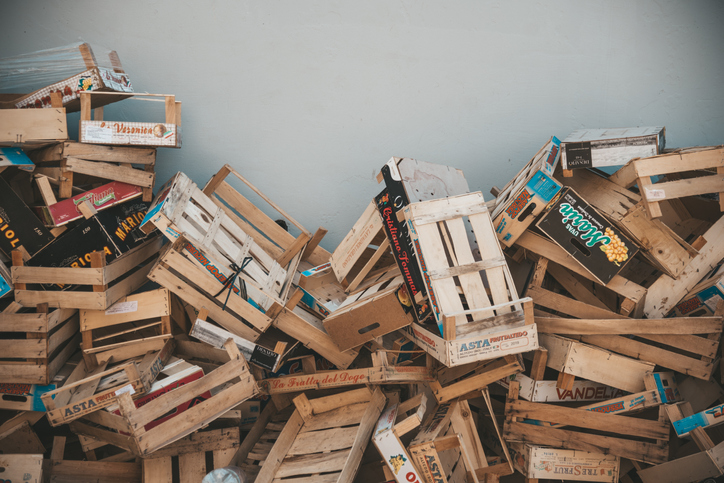
Quite simply, commercial waste is defined as any waste that’s generated by a business, regardless of the size or industry. While the types of waste can vary – such as packaging materials discarded by a retail store or food waste produced by a restaurant – this all falls under the umbrella of commercial waste, as it was generated during business activities. However, commercial waste typically doesn’t include hazardous waste, as this requires separate, specialised handling.
What is industrial waste?
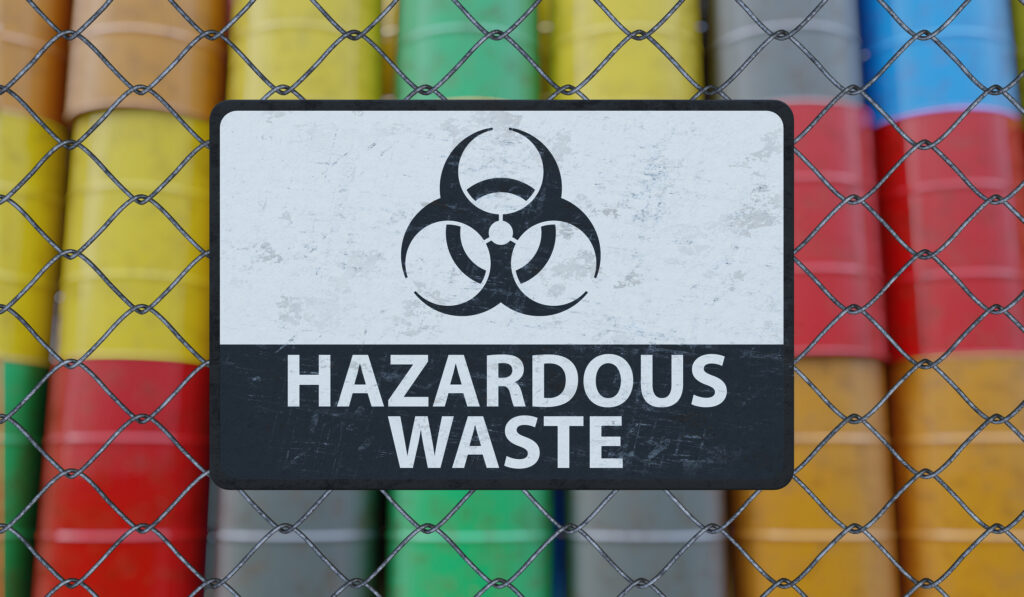
Industrial waste is defined as any kind of waste – whether liquid, solid or gas – that is a byproduct of manufacturing or industrial processes. This can encompass a wide variety of waste types, such as construction debris, chemical waste, heavy metals and more. Some industrial waste is classed as hazardous and can pose a significant risk if not disposed of properly.
What is the difference between commercial and industrial waste?
Although you might assume that commercial and industrial waste is essentially the same thing – basically any waste that is non-domestic and generated on business premises – there are a number of differences between the two, such as:
- Hazard level: Generally, most commercial waste is considered to be non-hazardous and can be disposed of in a skip – just check with your skip supplier if you’re unsure. Industrial waste, however, frequently contains hazardous materials, which means it must be carefully handled.
- Volume: Industrial waste is typically generated in much larger quantities and at a much faster rate than commercial waste, meaning that more complex waste management strategies are required. It’s estimated that half of all worldwide waste is industrial waste.
- Regulations: As we’ve mentioned above, industrial waste can often be considered hazardous, which means companies must follow stricter regulations when disposing of it to reduce risk and ensure safety.
- Disposal methods: Most commercial waste can be disposed of at an MRF (Materials Recovery Facility) where it will be separated, processed and recycled for further use. However, industrial waste will often require specialised handling and treatment.
What are the Controlled Waste Regulations 2012?
The Controlled Waste Regulations (England and Wales) were established in 2012 and this introduced specific waste classifications. Under these regulations, household, commercial and industrial waste is categorised as controlled waste, while sewage, septic tank sludge, radioactive materials and animal byproducts are not.
Defining what controlled waste is determines whether it falls under the Environmental Protection Act 1990 or not; under these rules, the waste producer has a legal duty of care to ensure it is properly disposed of. One of the main reasons for bringing in these regulations was to ensure the financial responsibility for disposing of commercial waste lies with the producer rather than the taxpayer.
How to dispose of commercial and industrial waste
It’s estimated that the UK generates over 40 million tonnes of combined commercial and industrial waste every year, so where does all of it go?
Commercial waste is typically much easier to get rid of than industrial waste, and one simple way to do this is via a commercial skip. When you work with a trusted skip supplier, such as SCS Waste, we can pick up, separate and process your commercial waste for you at our dedicated facility, where we strive to recycle 100% of all the waste we collect.
As there are so many different types of industrial waste, there is no one set method for how it can be disposed of. Instead, it depends entirely on the nature of the waste; for example, hazardous waste will need to be handled in a very different way to general manufacturing waste. If you’re unsure, it’s best to consult a well-established waste management expert like SCS Waste for advice.
If you need help disposing of commercial or industrial waste in Arundel, Littlehampton, Bognor Regis or the surrounding areas, contact the team at SCS Waste for help. We provide a variety of waste management services, including commercial skip hire, to ensure all of your business’s waste is responsibly disposed of, no matter the type or quantity. Get in touch with us today to discuss your needs in more detail.
SCS Waste
October 1, 2024Book a skip online from anywhere in Bognor Regis.
Need mini, midi, or roll-on roll-off skips?
We also offer wait and load skips for quick waste disposal.